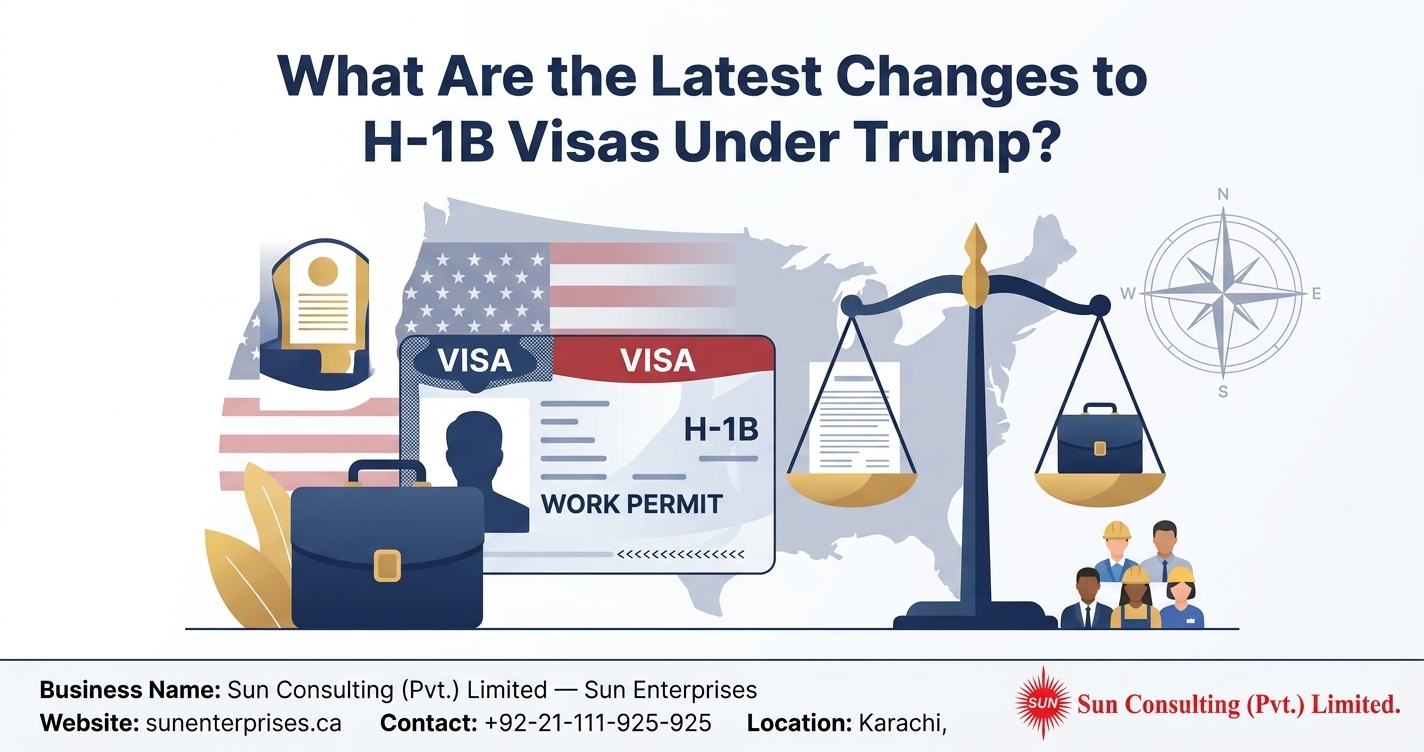
The H-1B visa program looks very different in 2026 than it did just a couple of years ago. Under President Trump, the changes have been swift and significant, a $100,000 fee on new petitions, a weighted selection system replacing the traditional lottery, stricter screening of employers, and proposed rules that could raise salary requirements and eliminate the 60-day grace period for workers who lose their jobs. For employers and foreign professionals alike, sponsoring and holding an H-1B has become more expensive, more competitive, and far less predictable than it used to be.
What Is the H-1B Visa?
If you work in tech, engineering, research, or education and you are not a U.S. citizen, chances are the H-1B visa is part of your story, or at least part of your plan. It is the visa that lets U.S. employers hire foreign professionals for specialized roles, and for many skilled workers around the world, it is the most realistic path to building a career in America.
Why Has the H-1B Program Changed Under Trump?
The Trump administration’s position is that the H-1B program has, in some cases, been used to bring in foreign workers at lower wages instead of hiring Americans. The policy changes are built around that concern, pushing the program toward higher-skilled, higher-paid workers while tightening oversight on employers. The stated goal is to protect American wages and jobs while making sure the visa goes to the workers the program was originally designed for.
Latest Changes to H-1B Visas Under Trump
Several important changes and proposals are shaping the H-1B program:
Proposed $103,265 H-1B Fee
The cost of sponsoring an H-1B worker could soon become even steeper. In August 2026, the Department of Homeland Security proposed formalizing a $103,265 fee for certain new petitions, building on the $100,000 payment that President Trump introduced in 2025. The proposal is not finalized yet and is facing legal challenges, but the direction is clear.
Higher Wage Prioritization
The days of every H-1B applicant having an equal shot are ending. The administration has shifted toward a weighted system that favors workers commanding higher salaries. Under the proposed changes, applicants tied to higher wage levels get a better chance of selection, which effectively reshapes who the program is for.
Stricter Applicant Screening
Getting through the H-1B process has never been easy, but now the scrutiny is even tighter. Enhanced vetting and more rigorous screening are part of the administration’s broader push to crack down on fraud and misuse. For legitimate applicants and employers, that means more documentation, longer wait times, and a process that demands more at every step.
Additional Employer Fees
It is not just new petitions getting more expensive. The administration has introduced or proposed additional fees for H-1B extensions and transfers as well. For employers, that means the cost of keeping a foreign worker does not stop at the initial sponsorship. It compounds over time, and for companies that sponsor multiple workers, those numbers add up fast.
How Could the New H-1B Fee Affect Applicants?
The proposed fee could have significant effects on employers and prospective H-1B workers:
- Employers may become more cautious about sponsoring foreign professionals.
- Smaller businesses could find H-1B sponsorship harder to afford.
- Companies may prioritize candidates with specialized or higher-paying skills.
- Some employers could consider hiring talent outside the United States.
- Applicants may face a more competitive sponsorship environment.
Final Thoughts
The ground is shifting fast under the H-1B program, and what applies today may not apply next month. Some changes are already in effect, others are proposed, and several are being fought in court. Making immigration decisions without understanding where things currently stand is a risk no one should take. SUN Consulting can help you cut through the uncertainty and understand what these changes mean for your specific situation. Call us now and get the clarity you need before making your next move.
Frequently Asked Questions
Is the new $103,265 H-1B fee final?
No, not yet. The $103,265 fee is a proposal as of August 2026, not a done deal. It still has to go through the regulatory process, and it is already facing legal challenges.
Will H-1B selection become more focused on higher-paid workers?
The administration wants to reshape who gets selected by giving preference to workers at higher skill and salary levels. If finalized, it would fundamentally change who has the best shot at an H-1B visa.
Should applicants still consider applying for an H-1B visa?
Yes, eligible professionals can still pursue H-1B opportunities, but current and proposed rules should be reviewed carefully because the program is undergoing significant changes.