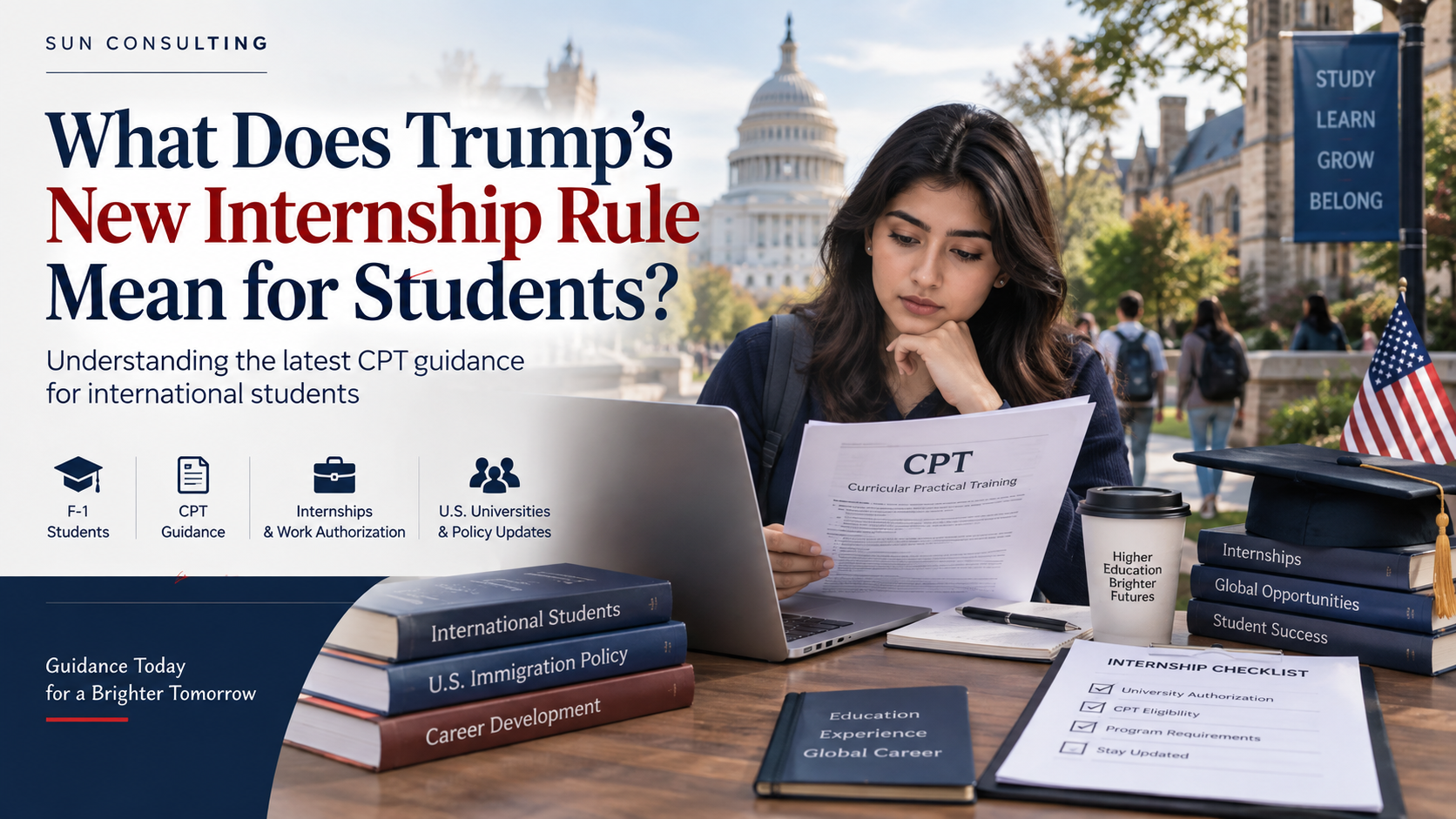
For international students, an internship is more than a line on a resume. It is often where classroom knowledge becomes real-world skill, where careers begin to take shape. But new guidance from the Trump administration is adding uncertainty to that path, particularly around how universities authorize internships through Curricular Practical Training. For students who depend on CPT to gain practical experience in the United States, understanding what is changing and how it affects them has become urgent. Students should also confirm the latest requirements directly with their university’s international student office before making decisions about employment or practical training.
What Is Trump’s New Internship Rule?
The Trump administration has directed U.S. universities to more strictly follow existing CPT requirements. Under CPT, F-1 international students can receive authorization for practical training that is an integral part of their established curriculum. CPT must be authorized by the student’s Designated School Official before the training begins.
What Does Trump’s New Internship Rule Mean for Students?
What international students will feel most is the extra layer of scrutiny before an internship gets approved. Universities are looking closely at whether the work is genuinely connected to the student’s academic program, while individual schools may apply their own review procedures. The takeaway is simple: start planning earlier than you think you need to, stay in contact with your international student office, and make sure every piece of authorization is in place before your first day.
How Does the New Rule Affect International Students?
International students may face additional review and fewer internship options when an internship is not clearly connected to their degree program.
Stronger Connection to the Curriculum
CPT must be closely connected to an established academic curriculum. Students may have more difficulty getting approval for internships that do not clearly support their coursework or degree requirements. Federal guidance states that CPT must be integral to the student’s program of study.
More University Oversight
Universities have an important role in CPT authorization, and students should expect their school to review whether an internship meets the applicable requirements. This may involve additional documentation, review steps, and communication between you, your employer, and your school’s international office.
Possible Delays
If your university needs additional time to review a CPT request, your internship plans could be affected. If you are considering an internship, contact your Designated School Official early rather than waiting until shortly before the intended start date.
Career Planning May Become More Important
Planning your courses is not just an academic decision anymore. For international students, the classes you choose and when you take them can affect how practical training fits into your program. The earlier you start talking to your Designated School Official about your plans, the more time you have to understand your options.
Final Thoughts
The rules and guidance surrounding international students can change, making it important to check current requirements before accepting an internship. CPT remains subject to specific eligibility requirements and must be properly authorized before the training begins. If you are feeling uncertain about what the changes mean for you specifically, SUN Consulting can help you understand your available student program options and next steps. You can also get in touch with SUN Consulting to discuss your situation.
Frequently Asked Questions
1. Does the new rule ban internships for international students?
No. CPT remains available when students meet the applicable requirements and receive proper authorization. The practical training must be an integral part of the student’s program of study.
2. Who is most affected by the new internship guidance?
F-1 international students seeking internships through CPT are most directly affected by CPT eligibility and authorization requirements.
3. Can international students still use CPT?
Yes. CPT remains available when students meet the applicable requirements and receive authorization from their Designated School Official before the practical training begins.